
Home » Trans Urethral Resection of Prostate Turp
Welcome
At Mater Health Services we understand that having an operation can be a very stressful experience. This booklet aims to alleviate some of your concerns in keeping with our Mission to offer compassionate, quality care that promotes dignity whilst responding to patients’ needs. It explains briefly what to expect before you come to hospital, the events that may occur during your visit and the things to expect when you are discharged from the hospital.
It is, however, only a guideline as each person may require differing treatments.
If you have any questions about your treatment please ask your doctor or nurse. Our pastoral care team offers a caring support network to all patients. The dedicated members of this team will visit you during your stay and are available at your request to discuss any anxieties or problems that you may have.
Please understand the following information should supplement what your doctor has already discussed with you regarding your operation and is simply providing you with a summary of information.
Transurethral resection of the prostate is the operation carried out primarily to relieve obstruction of urine passing from the bladder through the urethra. This operation is also known as a “Rebore”.
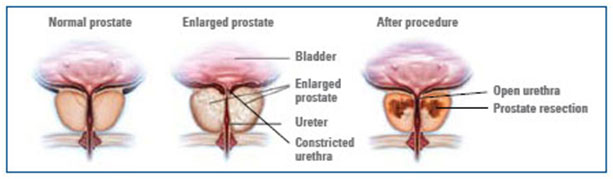
In most cases a spinal anaesthetic is given. In some cases a general anaesthetic is given. Your anaesthetist will discuss these options with you.
The operation is performed by passing a telescopic instrument in through the penis along the urethra and into the area where the prostate gland is obstructing. A special electrode is used to cut away the prostate tissue. At the end of the procedure, a catheter is placed and usually kept in place from between one to three days after surgery. While the catheter is in place irrigating fluid flows in and out of the bladder through the catheter. The purpose of this fluid is to keep the operated area and the bladder clean and free of clots.
Potential complications of surgery
While the TURP offers high success rates, like any other surgery there are still risks that need to be considered.
Bleeding: the risk of having significant bleeding is very small and it is very uncommon to need a blood transfusion. It is not uncommon though, to have blood in your urine for up to a couple of weeks after the operation and if you do see blood you should:
NB: seek medical advice if you are passing heavy blood or clots.
Infection: There is a small risk of developing an infection in the urine. This risk is however minimised by routine administration of antibiotics at the time of surgery.
Retrograde ejaculation: most men will experience retrograde ejaculation following a TURP. This means the semen goes into the bladder instead of down the urethra during ejaculation. The semen is passed out when you empty your bladder.
Irritative urinary symptoms: following surgery it is usual to have frequency of urination and urgency. Initially you might even find it difficult to reach the toilet in time. It is often thought that drinking less will resolve the frequency and urgency symptoms however it can actually add to the problem. It is therefore important to maintain the recommended fluid intake amount while you are experiencing these symptoms. Over the counter remedies such as Ural and Panadol may assist in relieving these symptoms.
Incontinence: in less than 0.5 per cent of cases incontinence can occur.
Penile erection: approximately one to two per cent of men who are sexually active before surgery will lose their ability to have a penile erection—however there are effective treatments available if this does occur.
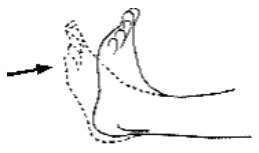
The following exercises help prevent complications suchas chest infections and blood clots in your legs. You should do these every hour that you are awake while resting in bed.Breathing exercises: take five long and slow deep breaths. Each breath should be deeper than the previous breath. Think about getting the air to the very bottom of your lungs.
Circulation exercises: firmly move your ankles up and down to stretch and contract your calf muscles.
Discharge advice following TURP
Even though you do not have an external visible scar it is important to remember you do have an open wound that is still healing therefore the following discharge advice is very important to understand and follow:
Twitter feed is currently turned off. You may turn it on and set the API Keys and Tokens using Theme Options -> Social Options: Enable Twitter Feed.